Winter conditions turn everyday material handling operations into a traction and uptime problem. Tire choice sits right at the intersection of safety, productivity, and total cost of ownership, as your tires are the first point of contact with every change in surface conditions.
At Papé Material Handling, we work with operations across the West and know winter can look very different depending on the location and type of operation. A lumber yard in the Northwest, a food facility with temperature swings, and a distribution center that runs tight aisles all face different challenges. The goals, though, are consistent: stable handling, predictable braking, and a tire setup that supports your environment and load profile.
Below is a practical guide to choosing between cushion, pneumatic, and non-marking tires when winter arrives.
Start with the Jobsite, Then Match the Tire
Before comparing tire types, map your actual travel path. A forklift that spends 90% of its time indoors might still face winter hazards if it crosses a dock apron or stages pallets in an outdoor covered zone. Identify:
- Primary Surface: Smooth concrete, asphalt, packed gravel
- Exposure: Indoor only, mixed indoor and outdoor, or outdoor yard worK
- Moisture and Temperature Swings: Condensation, washdowns, freeze-thaw cycles
- Debris and Puncture Risk: Scrap, splinters, nails, metal banding
With this as a baseline, the differences between cushion and pneumatic become clear.
Cushion Tires: Best for Smooth Indoor Surfaces in Winter Operations
Cushion tires are solid rubber molded to a steel band and are commonly used on forklifts designed for indoor work on smooth floors, especially where maneuverability matters in narrow aisles and tight turning environments.
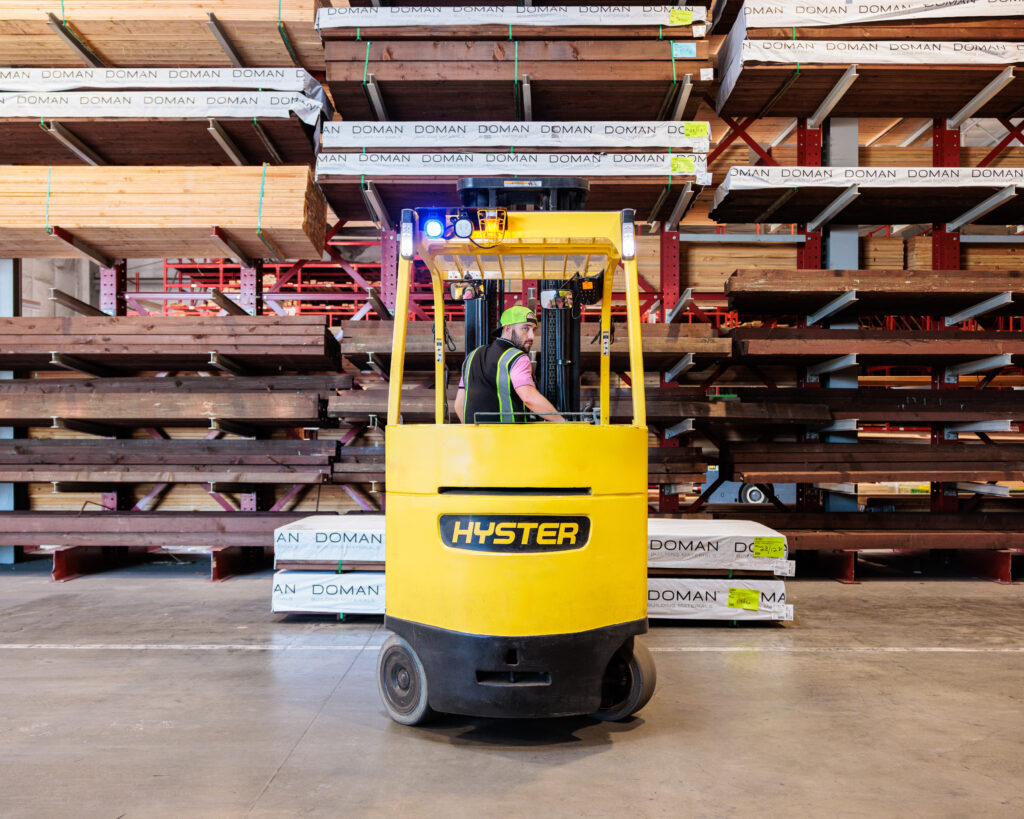
In winter, cushion tires can be a strong fit when your operation stays on polished concrete and the priority is precision. They support fast, controlled handling in high-density storage and predictable steering around racking, staging lines, and docks.
Where winter complicates things is moisture. Condensation near open doors, wet pallets, and tracked-in slush can reduce grip on smooth concrete.
Cushion tires can still perform well but benefit from a strong housekeeping plan:
- Keep dock areas dry, especially near thresholds and door tracks
- Clean up tracked-in slush immediately
- Inspect tread condition and wear more frequently during wet weeks
Cushion tires also typically pair with lower-ground clearance trucks. That means transitions across uneven thresholds and rough outdoor surfaces call for extra caution, or may be a sign that a different tire setup is better for your operation.
Pneumatic Tires: Traction and Stability for Outdoor Winter Surfaces
Pneumatic tires bring thicker tread and better absorption over uneven ground. If your forklift has meaningful outdoor travel, pneumatics are often the practical winter choice.
Air-filled pneumatics resemble automotive tires and are frequently used for mixed applications that move between indoor and outdoor areas. They tend to be more forgiving on imperfect surfaces thanks to their ability to absorb bumps and inconsistent terrain. In winter, that can translate into smoother travel, better load control, and more operator confidence when surfaces are wet or uneven.
If storm debris, scattered scrap, exposed nails, or metal banding create greater puncture risk during winter, solid pneumatic tires can be a smart choice. You keep a lot of the durability and surface tolerance you want outside, while reducing downtime from flats.
Non-Marking Tires: Keep Floors Clean While Staying Winter-Ready
Non-marking refers to the tire compound, not the tire structure. You can get non-marking versions of cushion, pneumatic, and solid tires. They’re commonly used in sensitive environments: food, packaging, paper, and other applications where black marks are a problem.
In winter, non-marking tires come up frequently in facilities that juggle cleanliness and seasonal moisture. Think wet entry zones, strict sanitation expectations, or spaces where floor appearances really matter.
The key is pairing the non-marking compound with the right underlying tire type:
- Non-Marking Cushion: Great for indoor aisles and smooth concrete when floor appearance is a priority
- Non-Marking Pneumatic: Helpful for mixed indoor/outdoor operations that still need to protect finished floors in indoor zones
A Decision Checklist for Winter Conditions
- If your forklift work stays inside on smooth concrete, relies on tight turns, and you want low clearance and precision, cushion tires are often the right fit.
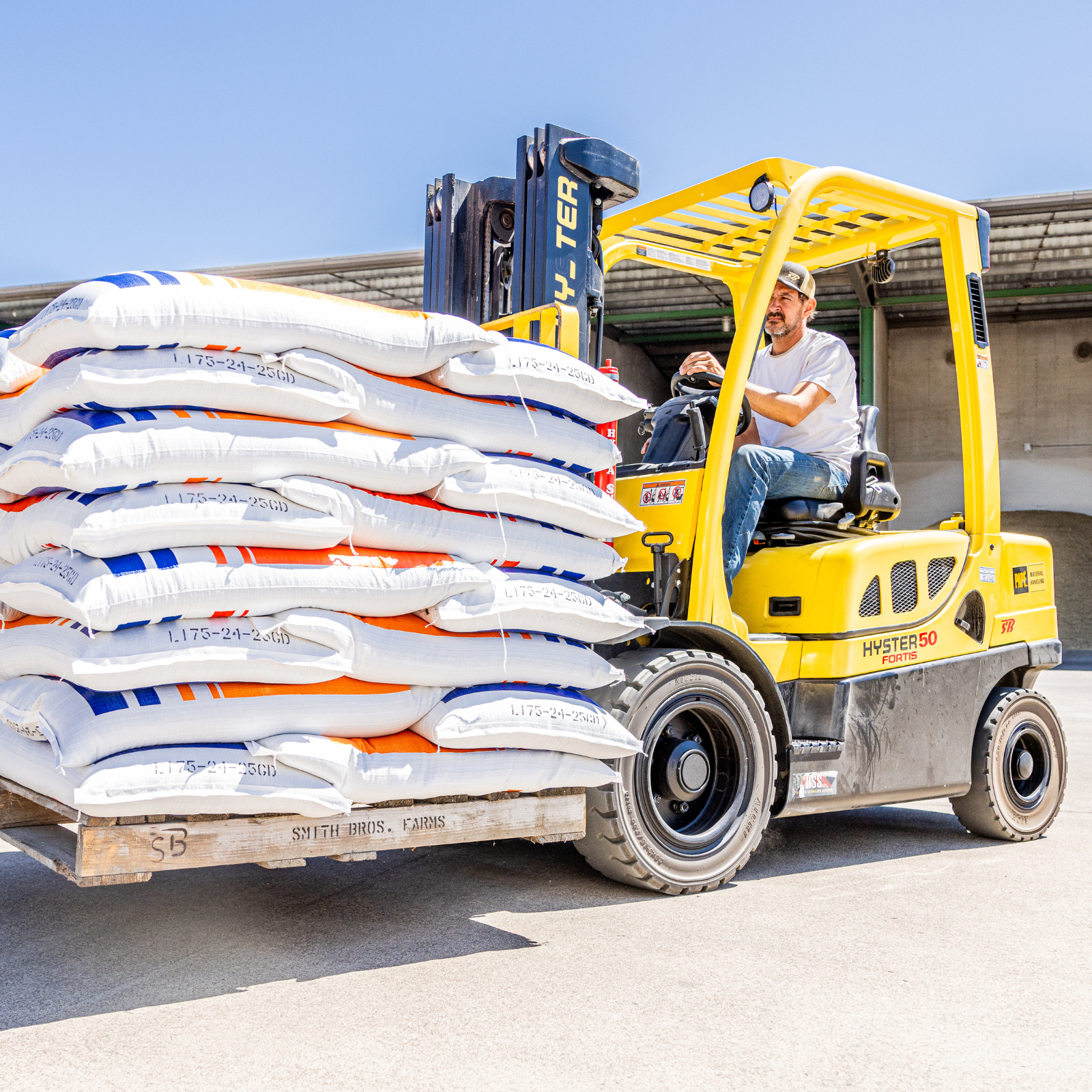
- If your trucks travel outside, cross uneven pavement, handle yard conditions, or operate on gravel, pneumatic tires usually provide the traction and shock absorption winter demands.
- If floor cleanliness and contamination control are central to your operation, non-marking options can be applied across tire categories to match the environment while protecting sensitive facilities.
Need Help Choosing a Winter Tire Setup?
Winter tire selection isn’t only about choosing a category; it also depends on correct sizing, site-specific realities, and consistent inspection. Forklifts are typically designed around either a pneumatic or cushion setup, and recommended sizing is usually found in the owner’s manual and/or on the tire sidewall.
That’s why winter is the season when fast support matters. When conditions change quickly, the difference between a straightforward tire swap and extended downtime often comes down to having the right tire spec in hand—and a team that can move quickly.
Ready to take the next step? A Product Support Representative from Papé Material Handling can conduct a complete site survey at your location to help determine the best seasonal or every day tire selection for your equipment. Contact your local Papé Material Handling to schedule.