In ports and terminals, equipment decisions have direct effects on throughput, safety, and uptime. Standard lift trucks can serve many operations well, but container work creates a different level of demand. Loaded containers bring serious weight, awkward dimensions, tight schedules, and constant cycling. Add in outdoor exposure, uneven surfaces, and stacking requirements, and the job quickly moves into heavy-duty equipment territory.
This is where container handlers are essential. Built for demanding shipping environments, these machines keep freight moving when conventional equipment reaches its practical limits. For businesses managing high-volume container flow, heavy-duty equipment becomes part of the infrastructure that keeps the yard productive.
At Papé Material Handling, we support these operations with container handlers, reach stackers, terminal tractors, and the service network needed to keep equipment running.
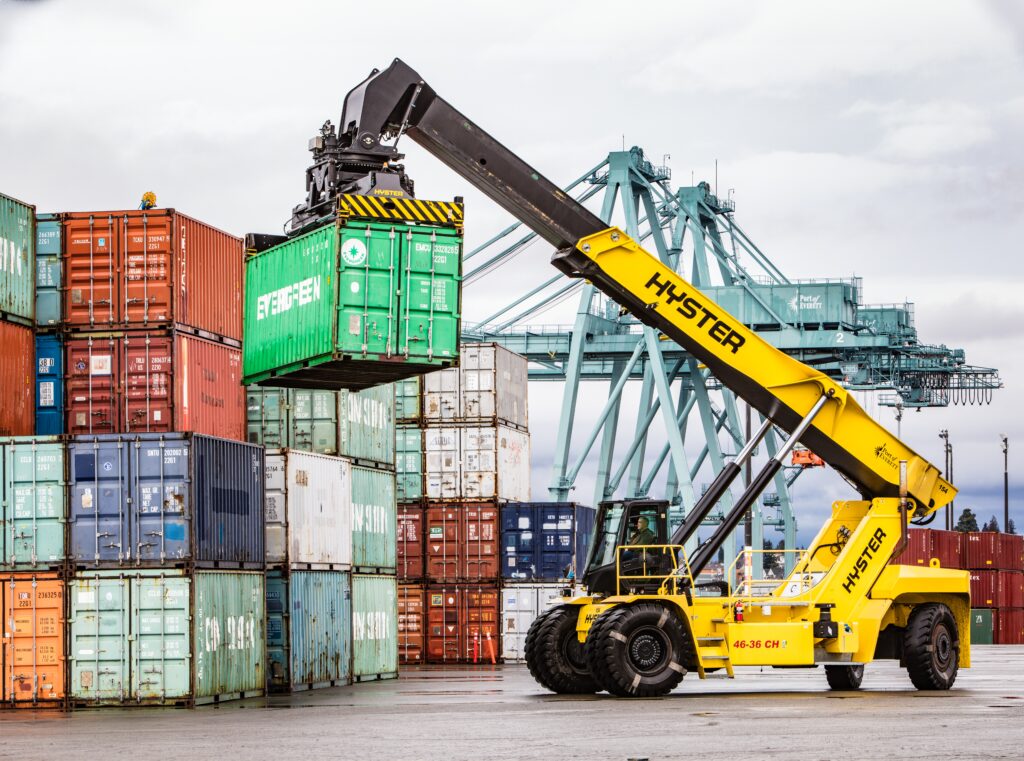
What Is a Container Handler?
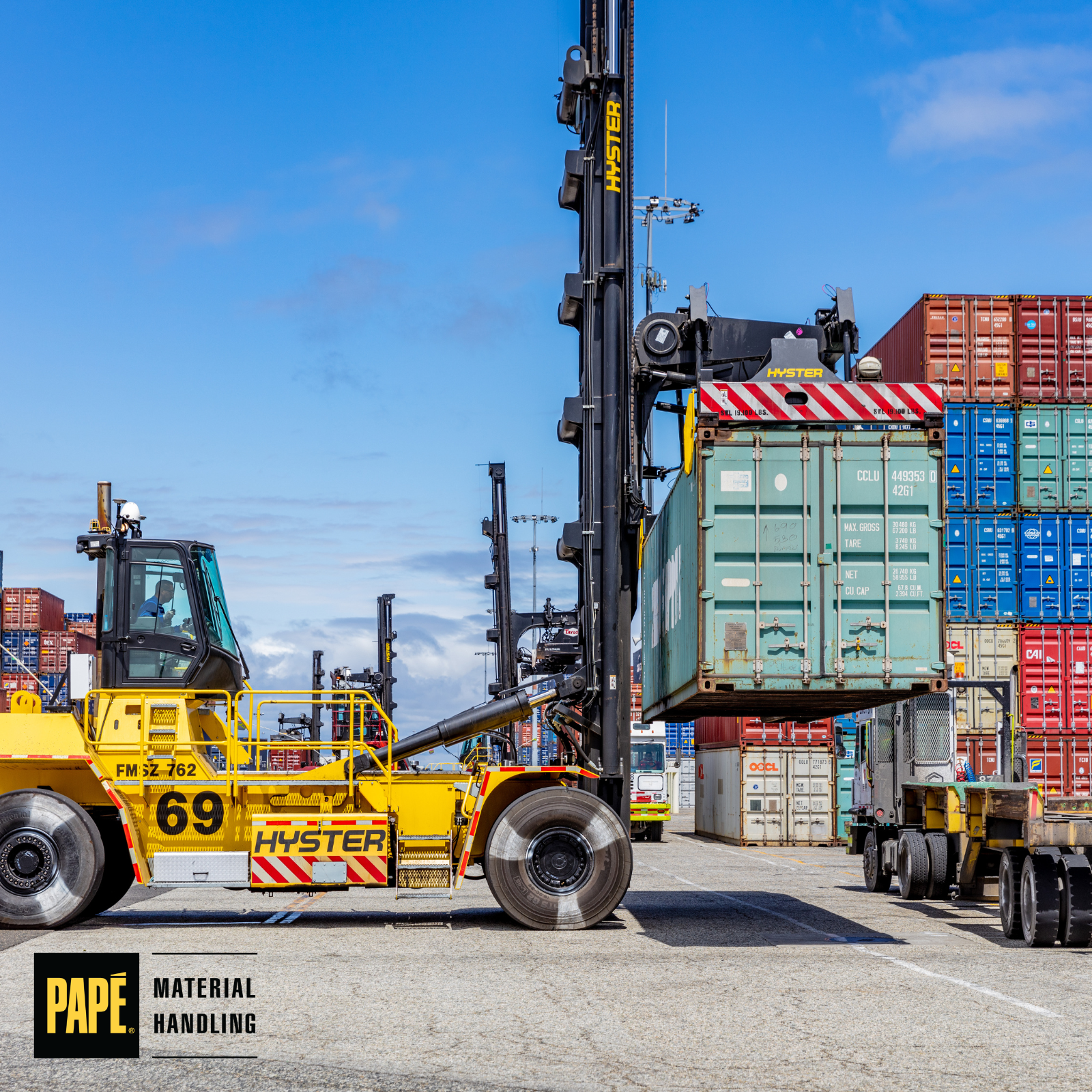
A container handler is a specialized heavy-duty truck designed to lift, move, and stack shipping containers safely and efficiently. These machines are engineered for repetitive, high-volume container handling in busy shipping facilities where performance and durability matter every hour of the day.
In our lineup, Hyster container handlers are built for the harsh environments common in intermodal terminals, railyards, and other shipping applications. Certain models are capable of stacking containers up to six high, which gives operators a significant advantage when yard density is a top priority.
Container handlers are closely related to reach stackers, though the application is a little different. A container handler is typically the right fit when high-volume lifting and stacking are at the center of the workflow.
Where Container Handlers Make the Most Sense
Common applications for container handlers include:
- Ports and Terminals: Fast cargo flow, limited yard space, and operator productivity all play a role in equipment selection. Heavy-duty solutions help manage congestion and maintain throughput.
- Intermodal Terminals and Railyards: These operations rely on frequent container transfers, repeat stacking, and dependable performance across long operating hours.
- Large Logistics and Shipping Facilities: Businesses with regular container movement need equipment built for consistent heavy lifting, not occasional specialty picks.
Container Handler vs. Reach Stacker
Container handlers and reach stackers both belong in the big truck conversation, but they solve slightly different problems.
- Container Handler: Often the best choice when repetitive lifting and stacking of containers is the core task. If the goal is efficient movement in a defined stacking pattern, these machines bring the strength and stability needed for the job.
- Reach Stacker: Better suited for operations that need extended reach, such as accessing containers across rows or working in more flexible stacking layouts.
Questions to Ask Before You Invest in a Container Handler
Start with these questions:
- How heavy are the containers you move most often?
- How high do you need to stack?
- How many hours per day will the machine run?
- Do you need dedicated stacking power or more reach and flexibility?
- Does a new purchase make sense, or would a used container handler or rental fit better?
Clear answers lead to better decisions and stronger long-term returns.
Why Support Matters as Much as the Machine
Downtime can ripple through your entire operation. A machine that’s unavailable at the wrong time can affect schedules, labor, trailer flow, and customer commitments. That’s why equipment decisions should also consider the level of service and support behind the machine. Papé Material Handling supports heavy-duty operations through several paths:
- New equipment
- Used equipment
- Rentals
- Financing options
- Repair and maintenance support
That flexibility matters when operations are growing, replacing aging units, or covering a temporary surge in demand. It also helps when a fleet needs a mix of ownership and rental strategies to stay efficient.
Regional support matters too. With locations across the West, service bays, technicians, and equipment resources are always nearby to support your operation.
If your operation is moving deeper into container work, talk with Papé Material Handling about container handlers, reach stackers, and other big truck solutions built for the job.