Managing a modern forklift fleet requires more than keeping equipment running. As operations grow, managers need to understand how trucks are being used, where downtime is occurring, what maintenance is costing, and whether the fleet is properly matched to the work.
Effective forklift fleet management turns that information into a strategic advantage. With solutions such as Hyster Fleet Management and Hyster Tracker, operations can gain greater visibility into equipment utilization, maintenance activity, impacts, and performance trends—providing a stronger foundation for productivity and cost-control decisions.
The Challenges of Managing Growing Forklift Fleets
As warehouses, distribution centers, manufacturing facilities, and other material handling operations expand, fleets often become more complex. Additional trucks may be added to meet demand, equipment may move between departments, and different applications can place very different demands on each unit.
Without reliable fleet visibility tools, it can be difficult to know whether equipment is being used efficiently. Some forklifts may accumulate hours rapidly while others remain underutilized. Maintenance may become reactive, and unplanned downtime can create bottlenecks across receiving, production, storage, and shipping.
Those inefficiencies contribute to higher operating costs and make consistent fleet performance harder to achieve.
What Is Fleet Management and Why Does It Matter?
Material handling fleet management combines equipment monitoring, utilization data, maintenance information, and performance reporting to provide a clearer picture of how a fleet operates.
Tools such as Hyster Tracker can provide insights into forklift utilization, equipment operating hours, impact monitoring, and other operational data. Instead of relying primarily on assumptions or generalized schedules, managers can use actual fleet activity to make more informed decisions.
That shift supports a proactive approach to fleet oversight. Maintenance can be planned around usage, high-demand equipment can be identified, and trucks that are not contributing enough value can be evaluated.
Over time, data-driven fleet management can help improve uptime, support better equipment decisions, and strengthen return on investment across the fleet.
Turning Fleet Data into Operational Improvements
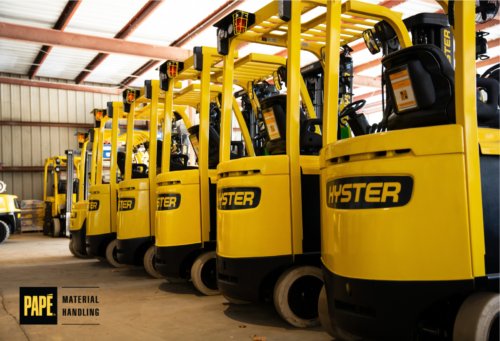
The value of fleet data is not the amount of information collected—it is what managers can do with it. Utilization reporting can reveal equipment that is consistently underused, as well as trucks handling a disproportionate share of the workload. That information may create opportunities to redistribute equipment between departments, balance operating hours, or reconsider whether additional units are actually necessary.
Maintenance trends can also highlight recurring repairs or equipment experiencing excessive wear. Impact data may uncover patterns tied to particular work areas, applications, or operating conditions.
By turning those patterns into practical actions, businesses can reduce equipment downtime and make continuous fleet improvement part of everyday operations.
Reducing Total Cost of Ownership Through Fleet Optimization
A properly optimized fleet can help control both capital expenses and ongoing operating costs.
Purchasing more equipment than an operation needs ties up capital and adds maintenance, insurance, and ownership costs. At the same time, operating too few trucks can cause excessive hours, accelerated wear, and costly disruptions.
Aligning Fleet Management with Productivity and Safety Goals
Impact monitoring can help identify recurring incidents rather than treating each damaged rack, tire, fork, product, or lift truck as an isolated event. A pattern of impacts in one location might indicate a traffic-flow issue, while repeated incidents in a particular application may point toward an equipment or training concern.
These insights give managers additional opportunities to reinforce operating practices, improve workflows, and reduce avoidable disruption. A well-managed fleet supports both efficiency and accountability, helping equipment remain available where and when it is needed.
The Value of Dealer Partnership in Fleet Management
Technology provides valuable fleet data, but experienced support helps turn that information into smarter business decisions. Papé Material Handling works with customers to evaluate equipment utilization, maintenance costs, fleet condition, and operational needs to identify opportunities for improvement.
By combining fleet insights with industry expertise, Papé can help businesses determine whether to repair or replace aging equipment, redistribute underutilized forklifts, or adjust maintenance strategies to reduce downtime. These recommendations help you make informed decisions that support productivity while controlling long-term operating costs.
Through Papé Fleet Management and parts and service support, businesses gain an ongoing partner in fleet optimization. As operational needs change, Papé can help you review performance, identify new opportunities, and make strategic equipment decisions that support your bottom line.
Take Greater Control of Your Forklift Fleet
If you are evaluating your current fleet performance or looking for opportunities to control long-term operating costs, connect with your local Papé Material Handling Fleet Management team to learn how Hyster fleet management solutions can turn equipment data into actionable operational improvements.