Warehouse safety is a top priority for employers who understand the high costs of workplace accidents, ranging from damaged equipment to potential lawsuits. In recent years, to address that concern, equipment manufacturers have added many built-in safety features and add-on options for their product lines to reduce the likelihood of forklift accidents and save employers both time and money.
Even with manufacturers making equipment safer, operators often overlook or forget standard safety procedures. Read on to learn more about our top forklift safety features your operators should be using every shift and be sure to cover them in your next warehouse safety meeting.
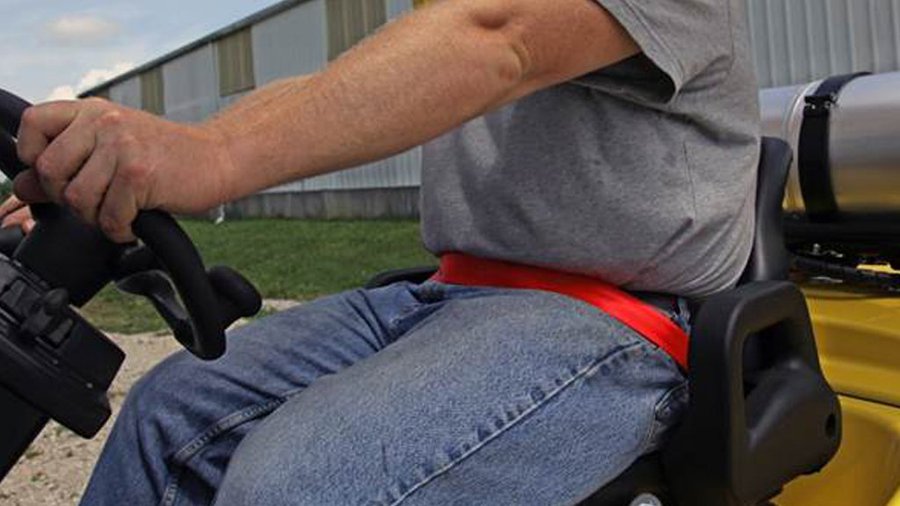
1) Forklift Seatbelt
Every single time an operator drives a forklift, they should be using the manufacturer installed seatbelt. Over 40% of fatalities involving a forklift are the result of the operator being crushed when a forklift tips over. A properly secured seatbelt can hold the operator safely in place in the event of a tipping accident. For improved safety procedures, an optional interlock system can be added to many forklift models that prevent the equipment from moving until the seatbelt is secured.
2) Headlights
In low light warehouse environments, LED or halogen headlights help enhance visibility both for the forklift driver and for pedestrians. Not only are these bulbs long-lasting, but they’re also easy to install, use significantly less power, and are environmentally friendly. It’s a good idea, no matter the layout or visibility of your warehouse, to have the lift truck operators use them at all times. You’ll simultaneously make the forklift operator, as well as pedestrians and other operators, more visible to each other from a safe distance, decreasing the likelihood of a major accident occurring.
3) Rear Drive Handle With Horn Button
The rear-drive handle gives operators a place to safely place their hand inside the lift truck when they turn to operate in reverse. The horn button on the handle allows them to alert pedestrians and other equipment operators without turning around to press the horn on the steering wheel.
4) Proximity Detection System
A proximity detection system can be added to material handling equipment to provide an audible and visual alert when equipment comes within a certain range of objects or pedestrians. Checking that the system is functioning should be a part of the operator’s daily inspection.
5) Parking Brake
Operators should be advised to use the parking brake whenever they exit the forklift, even if it is for a short break. The forklift’s parking brake will prevent the equipment from rolling when parked on an incline.
No matter how many safety features and aftermarket safety products you add to your equipment, your warehouse or distribution center is only as safe as your operators make it. The Occupational Safety & Health Administration (OSHA) requires an operator safety evaluation every 3-years. Ensuring that your forklift operators are completing mandated forklift safety training on schedule and creating a culture of “safety first” are the most critical components to an accident-free facility.
Contact your nearest Papé Material Handling location to learn more about standard safety features on new equipment or to purchase forklift safety accessories.