For warehouses, spring cleaning is a chance to step back, assess the condition of your equipment, improve the flow of your operation, and reinforce the habits that keep people safe and productive every day.
That’s important because small problems rarely stay small for long in a busy facility. A worn tire, cluttered aisle, or poorly marked pedestrian zone can slow movement, increase risk, and lead to avoidable downtime. Seasonal warehouse cleaning works best when organization and equipment inspection happen together, giving your team a practical reset before small issues turn into bigger disruptions.
Perform Equipment Inspections Before Problems Start
A strong spring reset starts with your fleet. Forklifts and other material handling equipment work hard every day, and over time that use creates wear that can be easy to overlook during normal operations.
Daily operator checks are still the first line of defense. They help catch leaks, tire wear, fork damage, chain issues, and safety concerns before they become serious problems.
Seasonal inspections add another layer by creating time for a deeper review of overall equipment condition. A focused forklift inspection should include:
- Tires, forks, and chains
- Mast operation and lift performance
- Battery or power system condition
- Fluid leaks and visible wear
- Alarms, lights, and other safety devices
Planned maintenance plays a major role here. Ongoing service packages supported by factory-certified technicians help keep fleets running efficiently, and periodic maintenance inspections help keep equipment running smoothly while supporting uptime across the operation.
Look Beyond the Lift Truck
Spring cleaning should extend beyond the lift truck to the full work environment. While equipment drives daily operations, the surrounding space plays just as important a role in safety and efficiency.
Aisles, loading dock areas, battery charging stations, storage zones, and walkways all deserve a closer look. Faded markings, poor lighting, damaged rack components, and cluttered staging areas can create confusion and increase the risk of incidents. Clear pathways and visible signage help operators make better decisions faster—especially in high-traffic areas where people and equipment move close together.
This is also a good time to review whether your current layout still supports how your warehouse operates today. Operations change over time, and yesterday’s setup can quickly become today’s bottleneck.For operations looking to take the next step, Papé Material Handling offers complimentary warehouse planning services to help analyze layouts, improve flow, and support long-term efficiency and safety.
Reorganize for Flow, Not Just Appearance
The goal of warehouse organization is not simply to make the building look cleaner. It’s to improve movement, shorten travel paths, reduce wasted touches, and make inventory and tools easier to access.
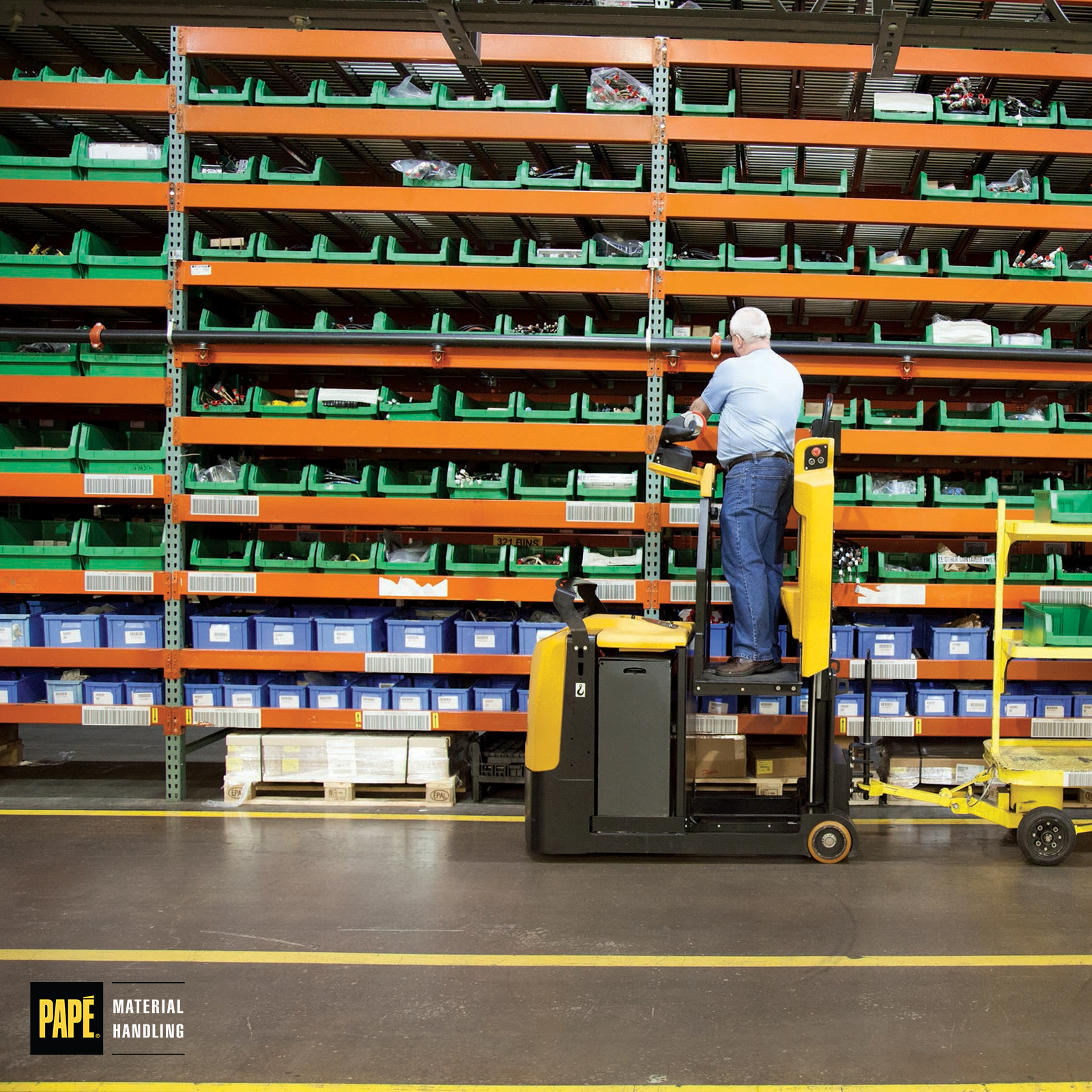
Start by identifying the areas that slow your operation down. Common trouble spots include overflow storage that has become permanent, congested pick zones, inconsistent pallet staging, and supplies stored too far from where they’re used. These issues create friction and reduce overall productivity.
A productive spring cleaning effort often includes a few practical changes:
- Move fast-moving inventory closer to primary activity zones
- Remove clutter that blocks visibility at corners and intersections
- Standardize locations for tools, chargers, and frequently used supplies
- Reevaluate staging areas that create traffic backups during peak periods
Warehouse layout planning, racking solutions, and automation options can all help improve productivity and reduce costs when the current setup is no longer supporting the pace of the operation. In some facilities, even modest layout changes can make travel more predictable and help create smoother throughput across the floor.
A Cleaner Warehouse Is a More Resilient One
Warehouse spring cleaning is really about readiness. A cleaner, more organized operation helps protect equipment, improve flow, and support safer performance across the facility. When inspections are paired with thoughtful organization, teams are better positioned to prevent downtime and keep work moving.
If your spring reset uncovers maintenance needs, layout challenges, or opportunities to improve warehouse efficiency, connect with your local Papé Material Handling team. With support spanning service, inspections, rentals, fleet programs, warehouse solutions, and locations across the West, we can help you build a cleaner, safer, more resilient operation for the season ahead.