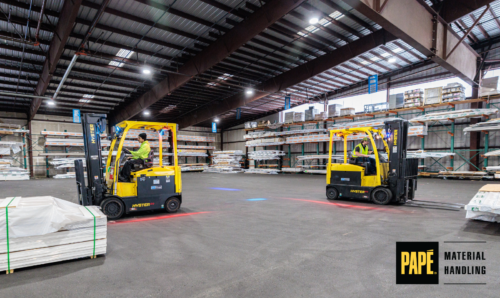
The consumer demand for faster lead times has led to an increase of inventory in warehouses across the country. With more inventory in the same square footage and the necessity to get product out the door faster, there is a greater likelihood of accidents and potential racking damage in the warehouse. Not only is a well-designed warehouse layout and operator safety training necessary to maintain a safe facility, but also proper inspection, repair, and protection of pallet racking.
RACKING INSPECTION
The most common way racking gets damaged is undoubtedly due to forklift impact. What may seem like insignificant damage to the untrained eye can in fact alter the structural load bearing capacity of the pallet racking system and result in a collapse. Racking should be regularly inspected for damage by management and annually by a qualified rack design engineer.
The components that should be inspected include:
-
- Columns (Pallet Racking Uprights)Columns are the component most likely to be damaged and should be checked often for rips, tears, and deflections. RMI/ANSI MH 16.1, Section 1.4.11 calls for a minimum plumbness and straightness (both cross and down aisle) of ½” per 10′ of height.
-
- BeamsBeam deflection should not exceed allowable deflection under load. To determine the allowable deflection, divide the length of the beam in inches by 180. If the deflection is greater than that amount, the beam will need to be repaired or replaced.
-
- Horizontal and Diagonal StrutsKeep an eye out for missing struts and damage at the welds. Support struts should be checked for deflection of greater that ½” in any direction.
-
- Footplates (Anchors)Uprights should not be torn or twisted from the footplates. Look for missing or loose anchor bolts. Anchor bolts should be torque tested periodically to ensure they are tightened to the manufacturer’s or structural engineer’s recommendation.
On structural racking, all bolts should be checked for tightness. On roll form racking, inspection should ensure that the beam locking pins are well seated in the tear drop clip. If beam locking pins are no longer seated properly in the tear drop, they can often be bolted in to stabilize the structure rather than replacing the entire beam or upright.
Typically, professional inspections are done from the ground and check the first six feet of racking where most damage occurs.
IMPACT REPORTING AND MONITORING
Reporting procedures and policies should be in place for forklift drivers to immediately report any impact with racking so that it can be properly inspected and repaired if needed. Unfortunately, drivers may not always fess up in the event of an accident. Drivers should be reminded that reporting damage is important for not just their own safety but everyone’s safety.
There are impact alert technology options that can automatically alert a warehouse manager in the event of impact. Hyster Tracker, for example, is a fleet management tool that sends a notification directly to the warehouse manager if a forklift exceeds preset impact allowance. Sensors can also be placed directly on each upright in the warehouse to detect impact and notify managers in real time.
RACKING REPAIR AND REPLACEMENT
When racking damage does occur, it’s important to call in a racking expert. The Rack Manufacturer Institute (RMI) Guideline for Assessment and Repair or Replacement of Damaged Rack states that the “damaged rack should be isolated and evaluated by a qualified professional prior to repair or replacement of the damaged components.”
Upon detection of any damage, the pallet rack affected should be carefully unloaded and a suitable distance must be taped off until it is appropriately assessed and repairs have been made.
Depending on the type and extent of the damage, many issues can be fixed by replacing the component with an exact match from the original racking manufacturer or by using a racking repair kit. Often, a racking repair kit is the more economical choice and is equal in terms of structural integrity. Regardless of whether you choose to replace or repair the damaged component, a structural engineer should be consulted to ensure the fix is the appropriate solution.
RACKING PROTECTION
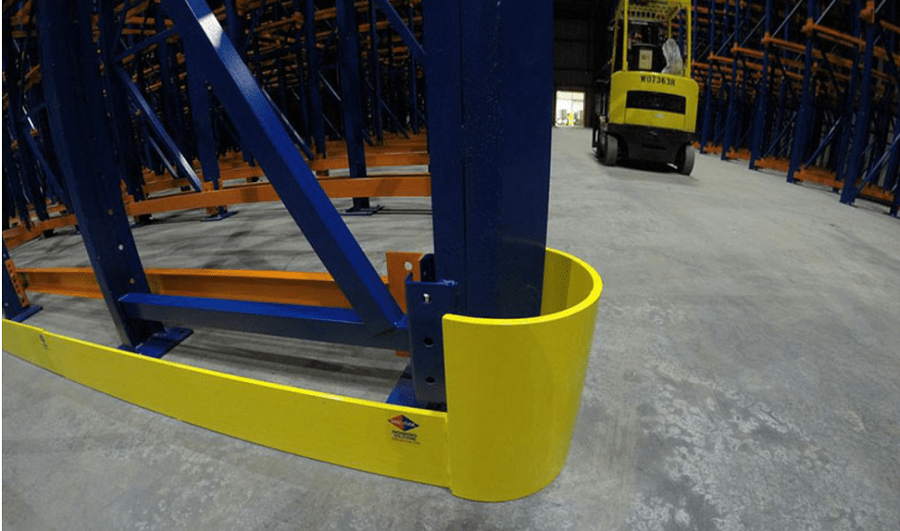
While there is no way to completely prevent accidents from occurring, there are ways to protect your racking investment and your employees from catastrophic damage or racking collapse. Racking protection can either be anchored to the floor or directly to the rack to protect it from damage. Warehouse design and product specialists can help guide you through the best racking protection options for your specific set up based on daily operations, forklift traffic patterns, and budget.
Types of pallet racking protectors to consider:
Many warehouse managers forget to budget for racking protection when planning for warehouse space, but it’s one of the most important safety features you can install. A racking collapse could be devastating for your organization, regardless of size. While this blog provides recommendations that can help protect your employees and your business, they are not a 100% guarantee to prevent collapse.
-
- Floor Mounted Rub RailFloor mounted rub rail bolts to the floor and can be up to 42 inches high. This type of protection is most often made of steel, but you can also find it in a poly material.
-
- Floor Mounted End Of Aisle ProtectionRack end barriers bolt directly into the floor along the end of the rack aisle and around the uprights to provide front protection.
-
- Steel HorseshoeHorseshoe-shaped post protectors are available in various heights and bolt into the floor to protect columns from damage.
-
- Steel Deflectors?Steel deflectors are mounted directly to the uprights to protect against impact. They are typically made of rubber with a steel insert and they do not need to be anchored.
Many warehouse managers forget to budget for racking protection when planning for warehouse space, but it’s one of the most important safety features you can install. A racking collapse could be devastating for your organization, regardless of size. While this blog provides recommendations that can help protect your employees and your business, they are not a 100% guarantee to prevent collapse.