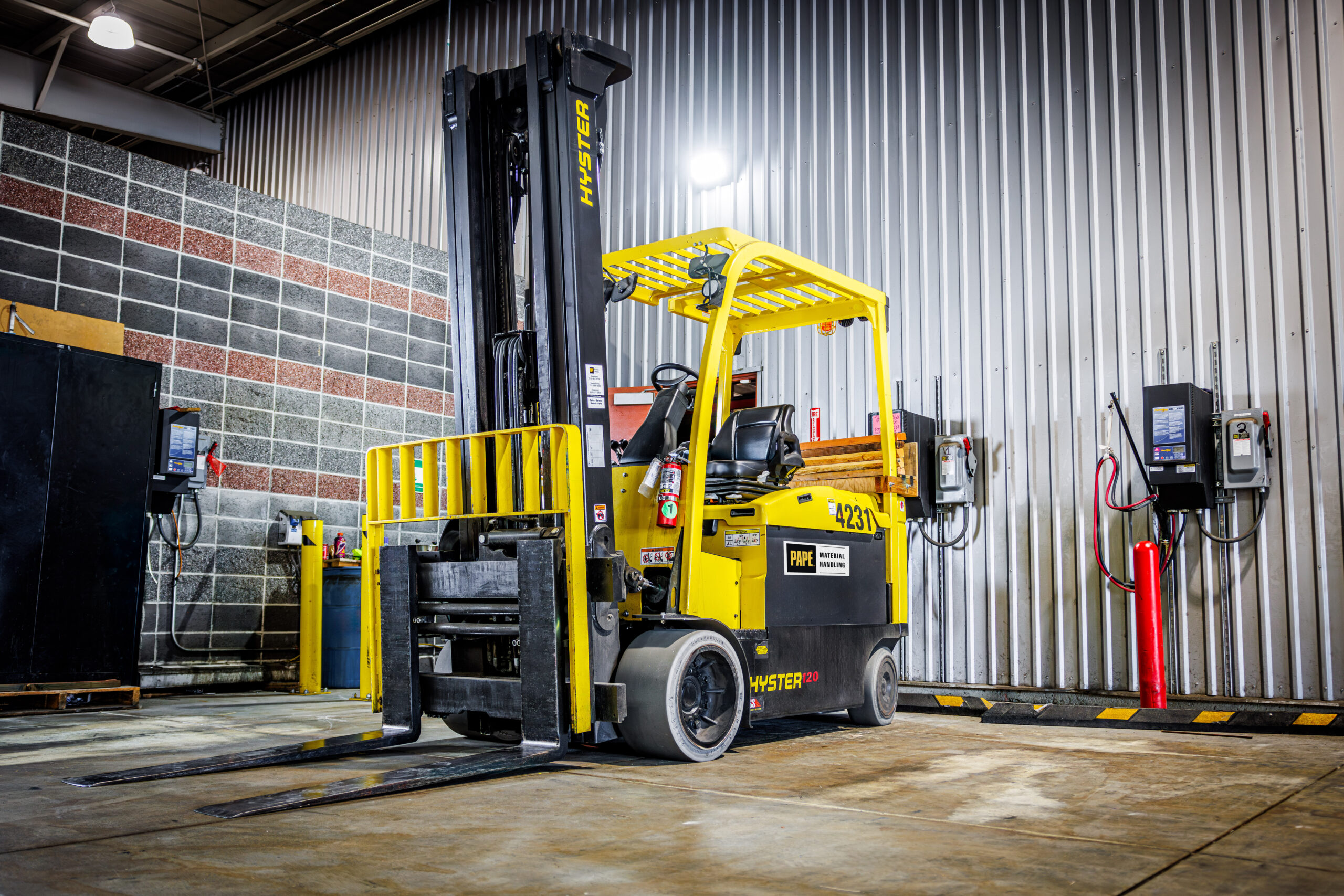
Electric lift trucks are clean, quiet, powerful, and efficient, and their productivity depends on the power system behind the truck. In warehouses, distribution centers, manufacturing plants, and cold storage facilities, a forklift stays productive when its battery, charger, and service plan can keep up with the pace of the operation.
At Papé Material Handling, we help businesses build complete motive power solutions that support long-term fleet performance. From selecting the right batteries and chargers to ongoing service and maintenance, we help customers maximize uptime, extend battery life, and keep their electric forklifts operating at peak performance.
What Are Motive Power Solutions?
Keeping an electric forklift running efficiently requires more than a battery. A complete motive power solution combines the right batteries, charging equipment, maintenance support, and fleet planning to maximize uptime, extend battery life, and help operations get the most from their electric material handling equipment. A complete motive power plan might include:
- Lithium-ion batteries
- Traditional lead-acid battery options
- Application-specific chargers
- Opportunity charging strategies
- Battery diagnostics and monitoring
- Battery and charger maintenance
- Cold-storage power solutions
How Battery Lifecycle Impacts Fleet Performance
Battery lifecycle affects replacement schedules, labor, downtime, space, and total cost of ownership. When batteries wear down too quickly or aren’t up to the demands of the application, the whole operation experiences the slowdown.
Short battery life leads to more frequent replacement purchases, charging or swap downtime, increased maintenance costs and labor, added battery room space, reduced capacity, and lower operator productivity.
Choosing batteries designed for long service life and pairing them with the right charging and maintenance strategy helps improve uptime, support more predictable fleet performance, and maximize the return on your electric material handling investment.
Lithium-Ion Batteries: Built for Uptime
For many warehouses and distribution centers, lithium-ion batteries have become the preferred choice for improving fleet productivity and reducing maintenance. Compared to traditional lead-acid batteries, lithium-ion technology can provide longer battery life, faster charging, and more consistent performance throughout the workday.
One of the biggest advantages is the flexibility of opportunity charging. Instead of scheduling operations around battery changes, operators can recharge during breaks, lunches, or shift changes, helping keep forklifts available without lengthy charging cycles or frequent battery swaps.
Lithium-ion batteries also require little routine battery maintenance, reduce the need for dedicated battery room space, and help improve overall fleet uptime. When paired with the right charging equipment and motive power strategy, they can help businesses increase equipment availability while lowering long-term operating costs.
A Smart Charging Strategy Maximizes Fleet Availability
A high-performing battery still needs the right charger and charging strategy. Charger size, charging location, shift schedule, battery type, and lift truck model all work together. When those pieces are aligned, trucks spend more time on the floor and less time waiting for power.
A smart charging strategy can reduce unnecessary battery strain, keep trucks available when demand spikes, limit mid-shift interruptions, support multi-shift operations, and improve the use of facility space.
Choosing the Right Motive Power Solution for Your Operation
No two warehouse operations have the same power requirements. A single-shift warehouse may have enough time for overnight charging, while a 24-hour distribution center may benefit from opportunity charging throughout the day. Cold storage facilities require battery solutions designed for low-temperature environments, and high-cycle manufacturing operations depend on consistent, reliable power to keep production moving.
When evaluating a motive power solution, consider questions such as:
- How many shifts does your fleet operate each day?
- How often are forklifts idle and available for charging?
- Are battery changes impacting productivity?
- Does your facility have space for battery storage and charging?
- Do your forklifts operate in refrigerated or freezer environments?
- Will the fleet grow in the next few years?
The right solution depends on your application. While lead-acid batteries continue to be a reliable choice for many operations, lithium-ion batteries may be a better fit for businesses focused on maximizing uptime, reducing maintenance, optimizing facility space, and supporting long-term fleet electrification. The key is matching the battery, charger, and service strategy to your equipment, facility, and operational goals.
Cold Storage Requires a Different Power Plan
Cold storage is a clear example of why application-specific motive power matters. Low temperatures can create challenges for battery performance, charging routines, and workflow.
Specialized battery technologies, such as Lithium Frost™ batteries, are engineered for cold storage environments and can operate and charge in temperatures as low as -20°F. These solutions help keep forklifts working where they’re needed most while reducing the need to move equipment in and out of temperature-controlled areas for charging.
That means fewer interruptions, more consistent uptime, and less movement in and out of cold zones simply to manage charging.
Maximize Electric Forklift Performance with the Right Motive Power Partner
A successful electric forklift fleet depends on more than choosing the right battery. Long-term performance comes from a complete motive power strategy that includes the right battery technology, charging infrastructure, preventive maintenance, and ongoing service support. When these components work together, businesses can improve uptime, extend battery life, reduce operating costs, and keep equipment performing reliably throughout its lifecycle.
As more warehouses continue to electrify their material handling fleets, selecting the right motive power solution becomes an important part of supporting productivity, sustainability goals, and future fleet growth.
At Papé Material Handling, we help businesses evaluate lead-acid and lithium-ion battery options, design charging solutions, plan for fleet expansion, and provide factory-trained service to keep electric forklifts operating at their best. Whether you’re adding your first electric forklift or optimizing an existing fleet, our team can help you build a motive power strategy that supports long-term performance and warehouse productivity.