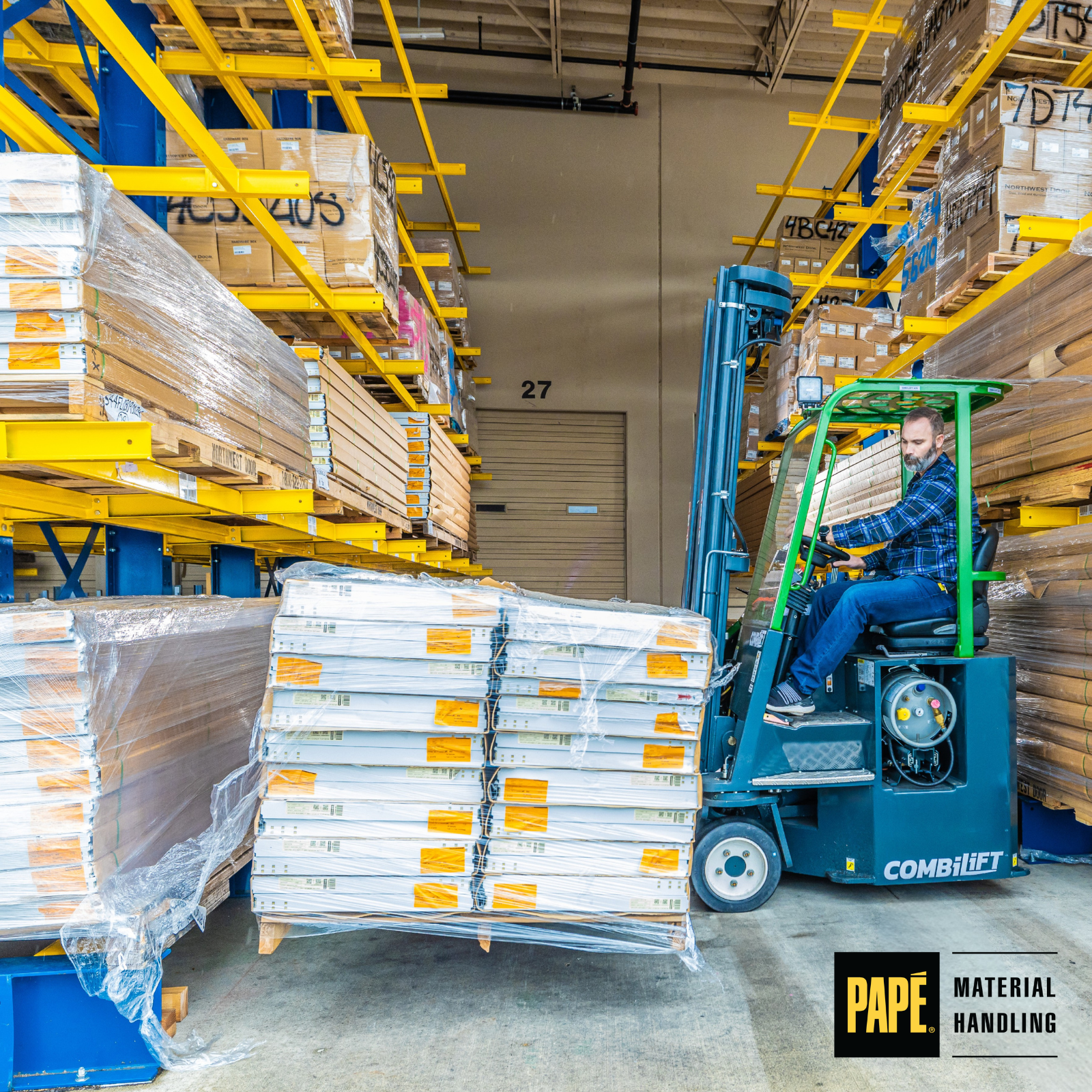
Handling long materials with a standard forklift can create problems quickly. Lumber packs, pipe, steel sections, panels, and other oversized loads need more turning room, operator precision, and open aisle space. In a busy warehouse or yard, this can lead to slowdowns, tighter traffic patterns, and added risk during transport.
As storage layouts get denser, the challenge becomes even more obvious. Many operations want to increase capacity without expanding their footprint, but long loads can make that difficult with conventional equipment.
Combilift multi-directional forklifts are built for exactly this kind of environment, helping improve maneuverability, enhance safety, and open up more usable storage space.
What Is a Combilift Multi-Directional Forklift?
A Combilift multi-directional forklift is designed to travel forward, backward, sideways, and diagonally. That steering capability is what sets it apart from a traditional counterbalance truck. Instead of forcing operators to make wide turns with long material, these forklifts allow loads to move in the direction that best fits the aisle and the task.
Combilift’s multi-directional design brings together advantages associated with a counterbalanced forklift, a sideloader, and narrow-aisle handling equipment in one machine. The C-Series is especially known for helping operations move oversized materials through confined spaces while maintaining strong lift capacity and stability.
Why Sideways Travel Matters in Tight Aisles
The biggest advantage of a Combilift multi-directional forklift is how it changes the way long loads move through a facility. Sideways travel lets operators carry lengthy materials in line with the aisle, rather than swinging them through wide turns that demand extra clearance. This shift can have a major operational impact. Instead of dedicating excessive aisle width to accommodate awkward handling paths, facilities can often use space more efficiently and improve traffic flow at the same time.
When long loads move more cleanly through narrow aisles, storage density becomes easier to improve without sacrificing access. That can support better throughput, smoother picking and put-away, and a more organized layout overall.
Where Combilift Forklifts Fit Best
Combilift multi-directional forklifts are a strong fit for operations that regularly handle long, bulky, or awkward materials. They are especially useful in industries where product dimensions create handling challenges even when load weights are manageable. Common applications include:
- Lumber and building materials yards
- Steel and aluminum distribution
- Manufacturing facilities
- Warehouses with dense storage layouts
- Indoor and outdoor operations with mixed handling needs
The right setup depends on the environment, the load, and the pace of the operation, but the core value stays the same: better control in tighter spaces.
Power and Model Options for Different Applications
One of the strengths of the Combilift line is its flexibility. There is no one-size-fits-all answer for long-load handling, which is why these forklifts are available in multiple power configurations and capacity ranges. Available options include electric, LPG, diesel, and hybrid models. That range gives operations more freedom to match the truck to their working conditions and performance requirements. For example:
- Electric models can be a strong fit for indoor use or emissions-sensitive environments
- Diesel and LPG models often make sense for heavier-duty applications or mixed indoor-outdoor use
- Higher-capacity configurations support operations handling larger and heavier materials on a regular basis
That flexibility makes it easier to align equipment with the realities of the job instead of forcing a compromise.
What to Evaluate Before You Buy or Rent
Choosing the right Combilift multi-directional forklift starts with understanding the application in detail. The most effective solution depends on more than lift capacity alone. Key factors to evaluate include:
- Load length, size, and weight
- Typical travel paths and turning constraints
- Aisle width and storage layout
- Indoor versus outdoor use
- Surface conditions
- Throughput requirements
- Seasonal or project-based demand
For some businesses, purchasing is the right long-term move. For others, a rental can make more sense for short-term needs, seasonal volume, or testing a truck in a live environment before making a fleet decision. Warehouse solutions planning can also play an important role when the goal is a broader operational improvement rather than a simple equipment replacement.
Why Work With Papé Material Handling
Choosing the right truck is only part of the process. Long-term value also comes from the support behind the equipment. As an authorized Combilift dealer, Papé Material Handling helps customers evaluate the right model for the application and supports it with equipment access, service, and parts support.
If your team handles long or awkward materials in tight spaces, a Combilift multi-directional forklift may offer a better way to improve safety, storage density, and day-to-day efficiency. With the right model and the right support, it can become an important part of a more productive handling strategy.
Contact Papé Material Handling to explore Combilift options, compare purchase and rental paths, and find the setup that fits your operation best.