Today’s warehouses face constant pressure to move product faster, protect employees, reduce damage, and make better use of every square foot. That is why warehouse technologies have become such an important part of modern operations. The right tools can improve visibility across the floor, support stronger safety practices, and help teams make smarter day-to-day decisions. At Papé Material Handling, we help businesses across the West evaluate technology as part of a larger warehouse strategy that includes equipment, fleet tools, automation, layout planning, and power solutions.
A practical way to think about warehouse technologies is to focus on the results they support. In most operations, the biggest priorities include safer traffic flow, better uptime, stronger space utilization, and clearer insight into how equipment is being used. The most valuable technologies are the ones that help solve those real operational challenges.
Operator Assistance and Safety Technology
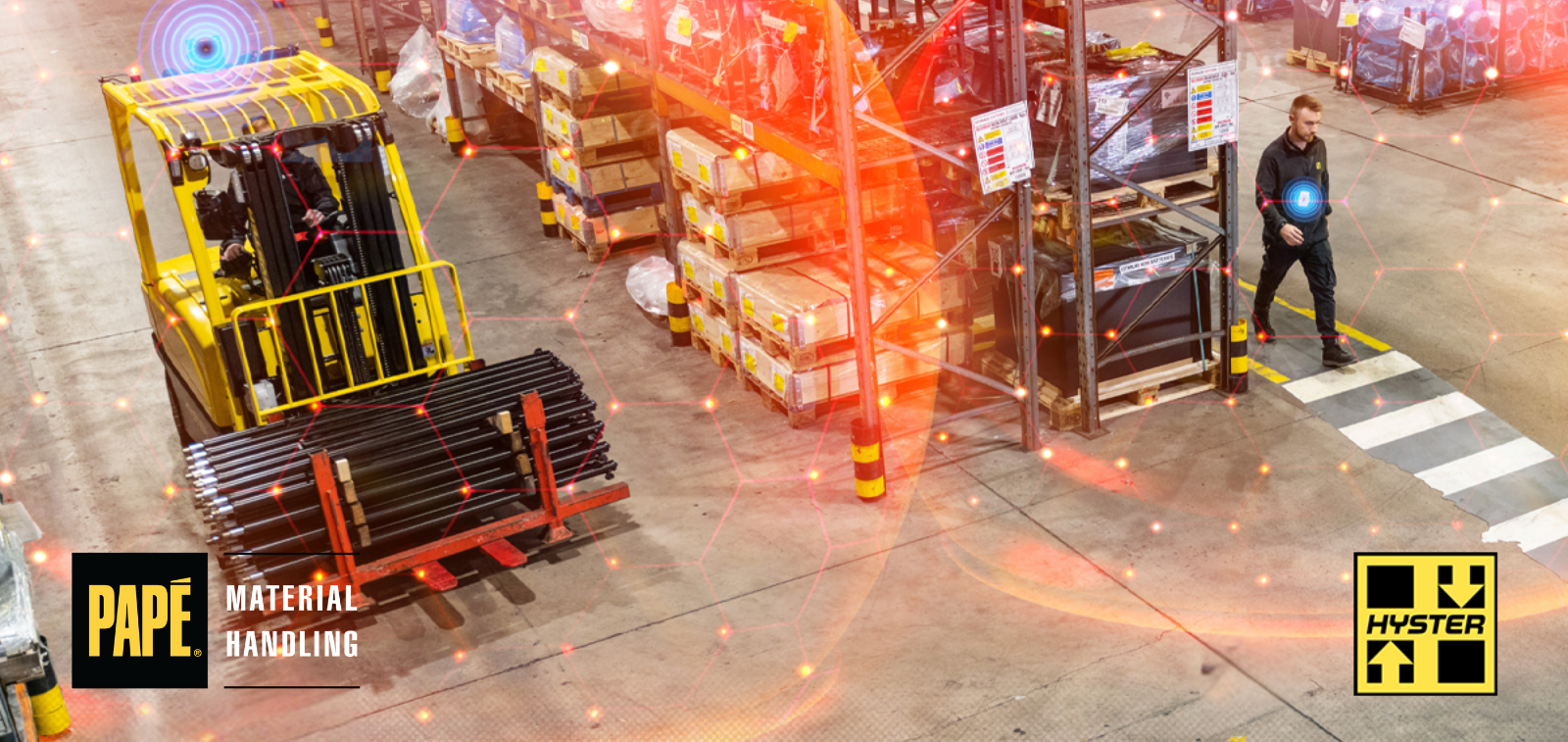
Safety technology is often the most immediate place to see value. In busy warehouses, operators and pedestrians are constantly sharing space, making situational awareness critical.
Step inside the Papé Warehouse Design Center in Seattle to experience firsthand how cutting-edge safety and automation technologies are transforming modern material handling operations.
The Pedestrian Awareness Camera for Hyster and Yale lift trucks detects pedestrians within approximately 16 feet and provides visual, audible, and optional traction alerts. It features a 110° rear-mounted field of view and is available for factory or field installation. Those details matter because they turn safety technology into something practical and actionable for active warehouse traffic zones.
Operator assistance technology also includes systems such as Hyster Reaction and Yale Reliant, which are designed to support safer truck operation and improve operator confidence. For warehouse leaders, this category of warehouse safety technology can help reduce risk while supporting smoother movement throughout the facility.
Fleet Management and Telemetry Tools
Another major category of warehouse technologies is fleet management. Telemetry solutions give managers a clearer view of how trucks are being used, where costs are building, and where performance can improve. On a practical level, these tools can help reduce damage to equipment and products, promote employee safety and compliance, lower costs through wireless management, improve fuel consumption, and keep maintenance and repair needs more visible.
Solutions such as Hyster Tracker and Yale Vision show how warehouse fleet management can move operations away from guesswork and toward measurable trends. Instead of relying on incomplete information, managers can use reporting and tracking tools to support accountability, maintenance planning, and better long-term equipment decisions.
Warehouse Layout Planning and Space Optimization
When warehouse space starts feeling limited, expanding into a new facility is not always the best or most practical solution. In many cases, improving the existing layout can create significant gains in storage capacity, workflow, and operational efficiency.
Papé Material Handling offers complimentary warehouse planning services designed to help operations evaluate their current space and identify opportunities for improvement. Our warehouse engineers assess storage density, traffic flow, equipment movement, and racking layouts to develop solutions tailored to the way the facility actually operates.
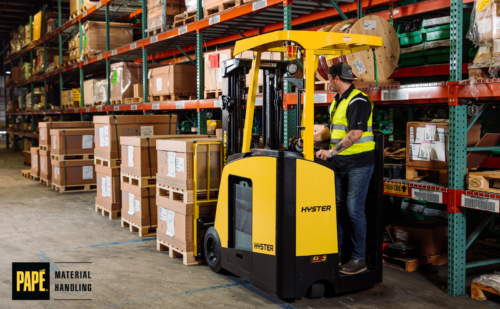
By combining counterbalance, side loader, and narrow aisle forklifts with optimized racking layouts, warehouses can make better use of vertical storage space and reduce wasted square footage. Equipment designed for narrow aisles and tight maneuvering also allows operators to move efficiently through standard doorways, around obstacles, and within denser storage configurations.
In many operations, these adjustments can significantly increase storage capacity while improving accessibility, traffic flow, safety, and productivity—all within the existing footprint.
Technology and layout planning work best when they support the operation as a whole, not as standalone upgrades. Papé’s approach focuses on customizing solutions around each customer’s specific storage needs, workflows, and long-term operational goals while helping reduce product damage, operational inefficiencies, and unnecessary facility costs.
Electrification as a Technology Strategy
Electrification also belongs in the warehouse technologies conversation. Power strategy affects performance, uptime, maintenance planning, and total cost of ownership. Papé Material Handling offers electric lift trucks across all classes, including equipment ranging from pallet jacks to high-capacity lift trucks. The benefits include reduced emissions, lower fuel consumption, lower maintenance costs, improved efficiency, and stronger performance. For example, the Hyster J80-120XN four wheel electric truck utilizes AC motors and transistor controller technology for both the traction and hydraulic systems, reducing the frequency and cost of maintenance.
For many operations, warehouse electrification is a strategic move that supports both sustainability goals and daily productivity. It also opens the door to evaluating the right motive power solution for the application, including traditional lead-acid and lithium-ion battery options.
What to Evaluate Before Investing
Before investing in new warehouse technologies, it helps to ask a few key questions:
- Where are the biggest safety risks today?
- What visibility gaps are making decision-making harder?
- Are damage and maintenance trends increasing costs?
- Is limited space restricting productivity?
- How well will new tools fit current systems and workflows?
The best investment is one that improves real operating conditions. If you are looking for warehouse technologies that support safer movement, better visibility, stronger uptime, and more efficient use of space, Papé Material Handling can help you evaluate solutions built around your operation.