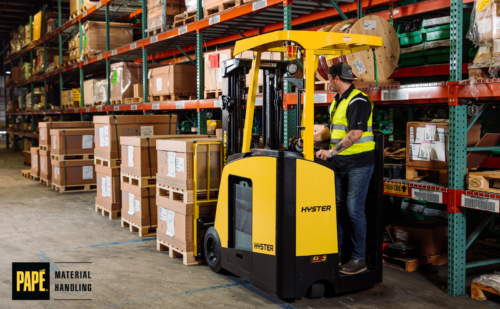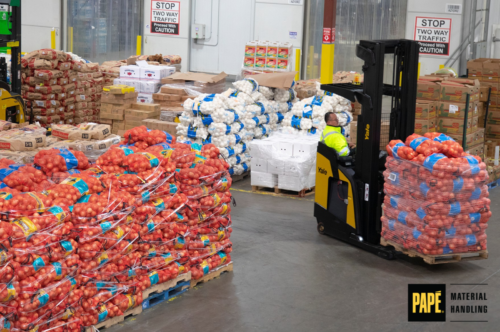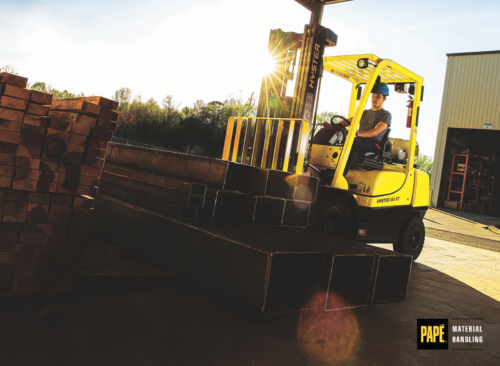
Each June, National Safety Month gives warehouses, distribution centers, and loading operations an opportunity to refocus on the people who keep materials moving. Led by the National Safety Council, the 2026 observance marks the 30th anniversary of National Safety Month and carries a broad mission: keeping people safe “from the workplace to anyplace.”
In material handling, safety supports uptime, productivity, operator confidence, OSHA compliance, and long-term equipment performance. A safer facility runs with greater consistency because employees know what to expect, equipment stays in better condition, and risks are addressed before they turn into unplanned downtime.
National Safety Month is a practical time to evaluate whether your current safety practices and protocols align with the way your operation runs today. The National Safety Council’s 2026 weekly themes include moving safety forward, staying safe on the road, promoting holistic worker health, and preventing slips, trips, and falls.
Identify Warehouse Safety Risks Before They Cause Problems:
- Pedestrian and forklift traffic patterns
- Aisle visibility, signage, and floor markings
- Loading dock procedures and staging areas
- Recurring equipment damage or near misses
- Housekeeping around pallets, cords, and debris
- The fit between your equipment and the loads being handled
Prioritize Operator Training, Maintenance, and Documentation
Strong forklift safety programs are built on three core pillars: operator training, equipment maintenance, and thorough documentation.
Operator training should be specific to the powered industrial trucks your team uses and the conditions operators face every day. A sit-down electric forklift, reach truck, order picker, and high-capacity lift truck each require equipment-specific knowledge.
Maintenance plays an equally important role. Tires, forks, chains, brakes, batteries, hydraulics, attachments, lights, and warning devices all influence safe operation. Heavy use can turn minor wear into a serious hazard.
Documentation keeps the program accountable. Training records, inspection logs, maintenance history, and incident reports help managers identify patterns, schedule service, and support OSHA forklift compliance.
OSHA requires employers to train and evaluate powered industrial truck operators before they operate equipment in the workplace. Refresher training is required when unsafe operation is observed, after an accident or near miss, when an operator is assigned a different type of truck, or when workplace conditions change in a way that affects safe operation. Each operator’s performance must also be evaluated at least once every three years.
Make Equipment Inspections a Daily Habit
Pre-shift inspections are one of the simplest ways to strengthen material handling safety. Operators should know what to inspect, how to report concerns, and when equipment should be removed from service. Common inspection items include:
- Worn or damaged tires
- Bent, cracked, or uneven forks
- Fluid leaks
- Battery or charging issues
- Brake concerns
- Warning light or horn problems
- Visibility obstructions
- Chain, mast, or attachment damage
At Papé Material Handling, our service packages help keep fleets running efficiently with periodic maintenance and factory-certified technicians. Planned Maintenance includes a 50-point periodic maintenance inspection to help identify service needs before they affect uptime or safety.
Use Technology to Improve Safety and Visibility
Technology can help operators and managers see more, respond faster, and better understand high-risk moments. In busy warehouses, lift trucks and pedestrians often share space, which makes visibility especially important.
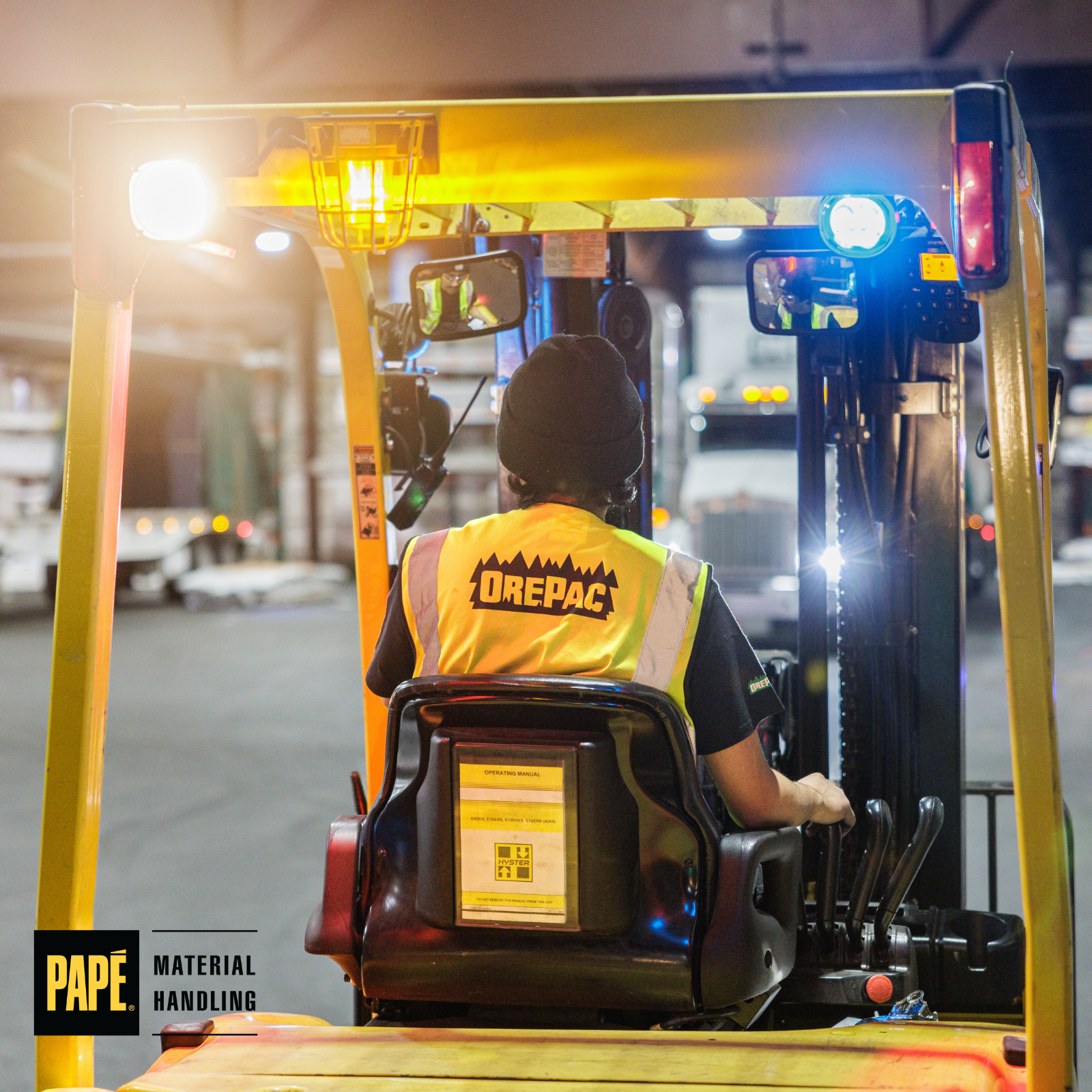
The Pedestrian Awareness Camera for Hyster and Yale lift trucks detects pedestrians within approximately 16 feet and provides visual, audible, and optional traction alerts. It features a 110-degree rear-mounted field of view and can be installed at the factory or in the field.
Operator-assist systems such as Hyster Reaction and Yale Reliant are designed to support safer truck operation and improve operator confidence. These technologies work alongside training, inspections, and clear facility practices to help teams move with greater awareness.
Additional safety products, including LED spotlights and Hyster Tracker systems, can support visibility, accountability, and safer equipment operation.
Use Fleet Data to Make Safer Decisions
Fleet management and telemetry tools help turn everyday equipment activity into useful safety insights. Managers can review data that shows how trucks are being used, where damage is occurring, and which service needs appear most often. Telemetry solutions can help teams:
- Reduce damage to equipment and products
- Promote employee safety and compliance
- Track maintenance and repair needs
- Identify underused or overworked equipment
- Support better fleet planning decisions
Papé Fleet Management solutions, including Hyster Tracker and Yale Vision, give operations leaders more visibility into performance, costs, and maintenance needs. Better visibility helps protect people, products, and equipment while supporting safer and more efficient warehouse operations.
Keep Safety Moving Forward with Papé Material Handling
At Papé Material Handling, we help businesses keep their teams moving safely with equipment solutions, service support, fleet management tools, warehouse technologies, safety products, and maintenance programs built around real material handling demands. Contact your nearest Papé Material Handling location to learn more.