Material handling in the metals industry puts equipment and operators under constant pressure. Capacity alone doesn’t determine whether a forklift is right for the job. Metals operations need equipment, attachments, technology, and support strategies matched to the application to improve durability, load control, safety, productivity, and uptime.
Start With Equipment Built for Harsh Environments
Heat, airborne contaminants, vibration, rough surfaces, and long operating hours accelerate wear and increase maintenance demands. Lift trucks used in severe-duty metal applications should protect critical systems and perform reliably throughout demanding shifts.
That may mean enhanced cooling, sealed components that limit debris intrusion, and durable frames, masts, axles, and drivetrains. Pneumatic tires can also provide needed traction on outdoor or uneven surfaces. Evaluate temperature, surface conditions, contaminants, travel distance, shift length, and maintenance access rather than choosing a truck on rated capacity alone.
Match the Truck and Attachment to the Load
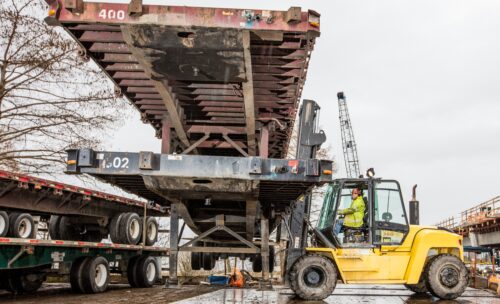
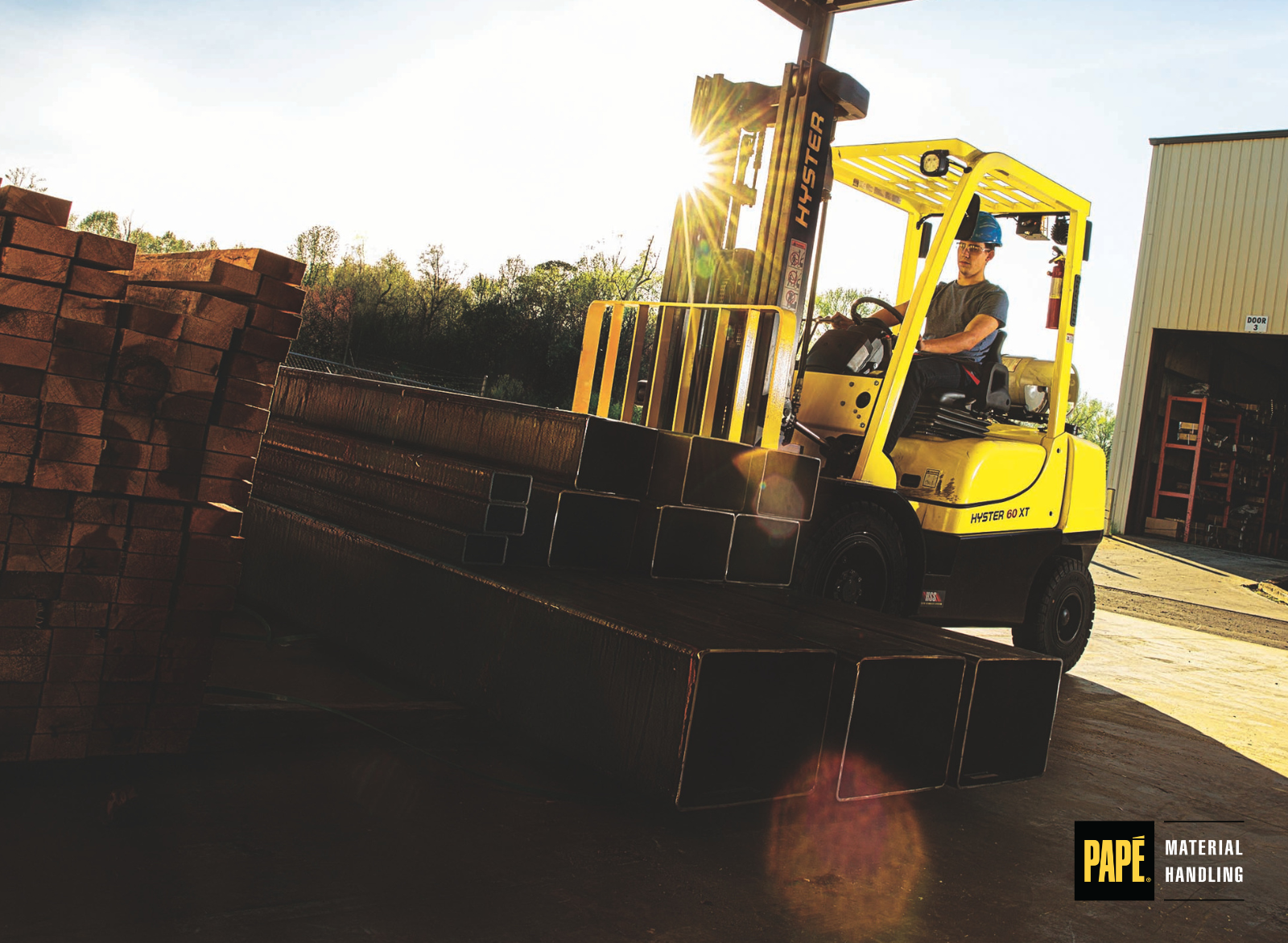
Poorly matched equipment can increase product damage, slow cycle times, accelerate wear, and create unnecessary risk. High-capacity forklifts provide the strength needed for oversized materials, but the truck must also be paired with the correct front-end solution.
Coil rams, C-hooks, specialized forks, magnets, and hydraulic clamps can improve control for specific products. Every attachment, however, can affect the truck’s effective capacity, load center, visibility, and handling characteristics.
A material handling specialist can assess the load, travel path, lift height, storage method, and production requirements, then evaluate the truck and attachment as one complete system.
Improve Visibility and Reinforce Safer Operation
Metals facilities often combine large equipment, pedestrian traffic, blind intersections, obstructed sightlines, and loads that limit forward visibility. Operators need a clear view of the load, travel path, and surrounding activity.
Ergonomic compartments and strong all-around visibility provide an important foundation. Cameras, object-detection systems, pedestrian awareness systems, dynamic alerts, and stability or operator-assist technologies can provide added support. These tools may alert operators to obstacles, travel conditions, or load-related concerns.
Warehouse safety technology doesn’t replace trained operators, traffic controls, inspections, or established policies. It works best within a broader safety program that includes recurring training, especially when a facility adds equipment, changes attachments, modifies routes, or brings new operators onto the team.
Use Fleet Data to Find Hidden Costs
When budgets are tight, managers need to know how every truck is being used. Telemetry and forklift fleet management tools replace assumptions with measurable information.
Managers can review utilization, idle time, impacts, service history, operator access, maintenance intervals, and fuel or energy consumption. That data can uncover underused equipment, trucks assigned to the wrong application, recurring damage, inefficient routes, and maintenance patterns that may lead to downtime. Impact reports may identify a problem area in the facility rather than an isolated operator issue.
Control Costs With a Flexible Fleet Strategy
Buying new equipment is only one way to maintain production. A flexible strategy may include preventive maintenance, leasing, rentals, carefully selected used equipment, and reassignment or removal of underutilized trucks.
The lowest purchase price does not always produce the lowest operating cost. Compare maintenance, fuel or electricity, downtime, parts availability, productivity, and expected service life. A less expensive truck that requires frequent repairs or cannot keep pace may cost more over time.
Rentals can help cover seasonal demand, planned service, or unexpected workload increases without committing capital to a permanent addition.
Balance Operator Comfort With Productivity
Metals operations can be hot, noisy, and physically demanding. Operator comfort can affect focus, equipment control, and productivity during long or repetitive shifts.
Adjustable seating and controls, reduced vibration, convenient entry and exit, protected or climate-controlled compartments, clear displays, intuitive controls, and responsive hydraulics can reduce strain. Smooth handling also helps operators position difficult loads with greater confidence and precision.
Combined with ongoing training and development, well-designed equipment can support consistent performance while helping qualified employees stay engaged.
Choose a Power Solution That Supports Performance and Sustainability
The right power source depends on the duty cycle, environment, charging or fueling infrastructure, emissions goals, and required uptime. Options may include diesel, LPG, lead-acid batteries, lithium-ion batteries, and hydrogen fuel cells.
Correctly specified electric forklifts can reduce localized emissions and support indoor air quality in suitable applications. Efficient internal-combustion lifts may remain the better choice for certain high-capacity, outdoor, or continuous-duty operations.
Evaluate energy use across the entire shift, including charging or fueling time, maintenance, infrastructure, and expected uptime. Sustainability planning should also address responsible recycling or disposal of batteries, fluids, packaging, and operational by-products.
Build a More Resilient Metals Operation
Material handling in the metals industry requires more than lifting capacity. The right combination of application-specific equipment, attachments, technology, power solutions, and ongoing support can help control costs, improve productivity, and protect uptime.
Contact your local Papé Material Handling for an application assessment and tailored solution. The team can help you explore Hyster forklifts, fleet-management tools, rentals, financing, operator training, parts, and service to keep your metals operation moving.