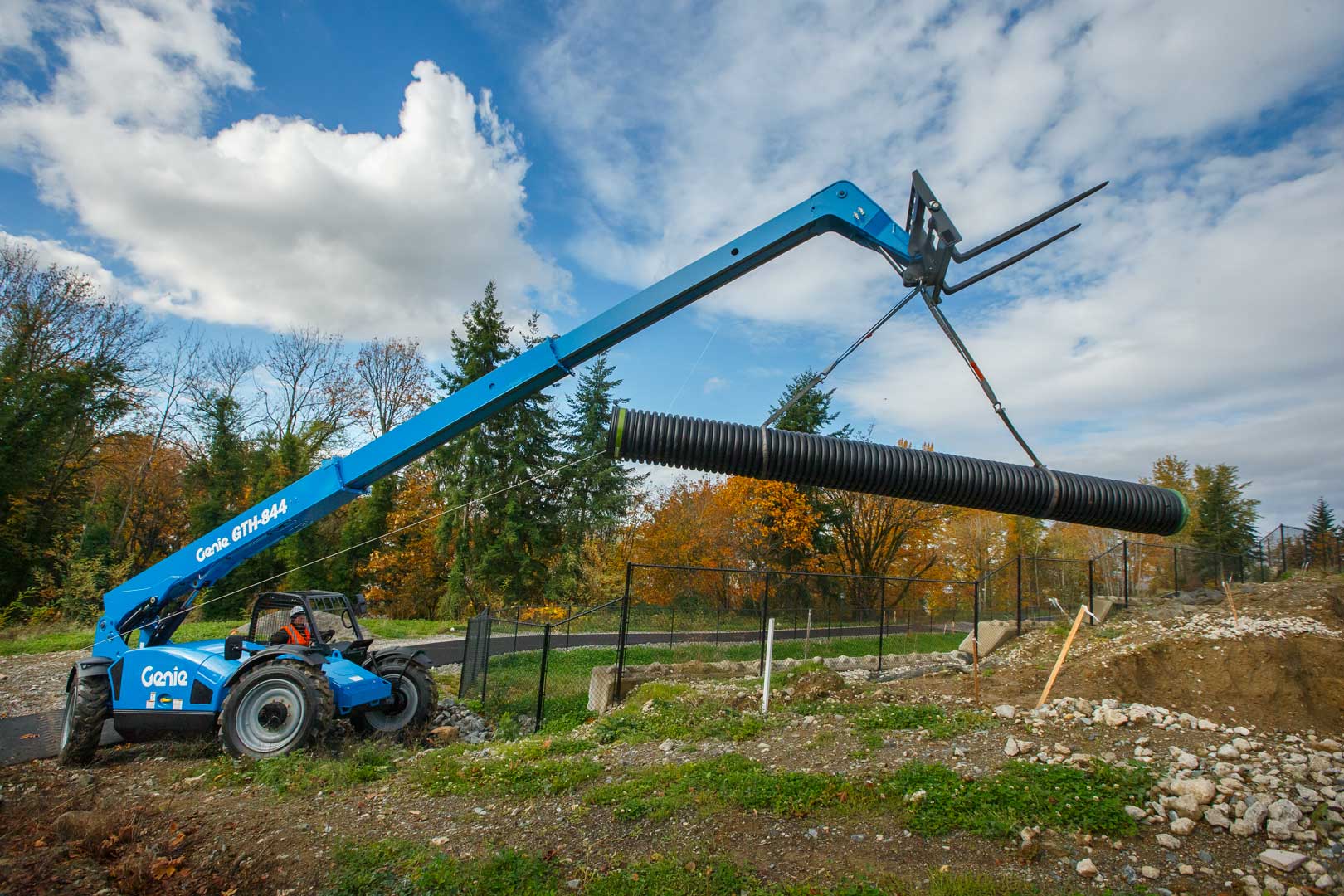
As a telehandler operator, it’s vital to conduct a proper pre-use telehandler inspection daily to ensure safety on the job, no matter your project. Taking the time to conduct a pre-use check can help you avoid long-term engine and drive-shaft damage, unnecessary and costly repairs, and – most importantly – injuries to employees on the job.
Regardless of if you’re operating a new or used telehandler, this telehandler inspection checklist will keep your operators safe and moving forward.
Drive Train
-
- Inspect the tires and wheels and make sure the wheel lug nuts meet the recommended torque for the model specification.
- Make sure the tire pressure is filled to the manufacturer’s recommended level; these pressures are stated on the side of the tire wall for reference.
- Check that the steering & wheel stops correctly.
- Ensure the service brakes and park brake are operating effectively.
- Check that the brake fluid level is between the two marks on the fluid reservoir and that the coloration isn’t dark.
- Check the hydraulic hoses for necessary adjustments or replacements. Make sure the hoses are firmly capped and attached, that there are no leaks or breaks in the hoses, and there is no debris in the lines.
Mechanics & Hydraulics
-
- Inspect hydraulic tank cap venting systems.
- Clean the hydraulic tank filter element and cab air intake filter.
- Ensure the hydraulic oil level is filled to the model’s recommended level.
- Make sure all circuits operate properly.
- Ensure hydraulic hoses are aligned and not leaking.
Power Unit
-
- Check the engine oil, coolant, transmission, and battery fluids levels to ensure they’re at the ideal level and are not leaking.
- Make sure the battery works and electrical wiring is correctly installed.
- Ensure the radiator and oil cooler are clean.
- Evaluate and clean the exhaust system and engine air filter to avoid sluggish acceleration or misfiring.
- Lubricate the drive shaft.
Booms & Forks
-
- Ensure the boom hoses are adjusted and don’t have leaks.
- Lubricate the boom.
- Make sure the sequencing chains and cables operate properly; check that the anchor bolts are tightened.
- Inspect the boom wear pads for uneven wear; if the angle indicators are visible, the pads can still be used.
Other Functions & Controls
-
- Check for open bulletins and owner registration.
- Ensure the seat belt is in good condition and buckles without a hitch.
- Make sure all gauges are operating properly.
If you notice any damages or modifications to your telehandler during your inspection, do not operate it; instead, make notes of any abnormalities and take your machine to a qualified service technician.
Our technicians at Papé Material Handling will be happy to repair your telehandler – or any other heavy equipment you need to be serviced. You can also visit your nearest Papé Material Handling location to view new telehandlers for sale or receive a quote on our selection of used telehandlers.